Aquarium and Pond Filtration Systems: Guide to Choosing, Setting Up, and Maintaining the Right Filtration Solution

Disclaimer
The information provided in this article is for general informational purposes only. Results may vary depending on water conditions, fish species, stocking levels, and equipment used. Always follow manufacturer instructions and consult an aquatic professional if needed. The author and publisher accept no responsibility for any loss, damage, or issues resulting from the use of this information.
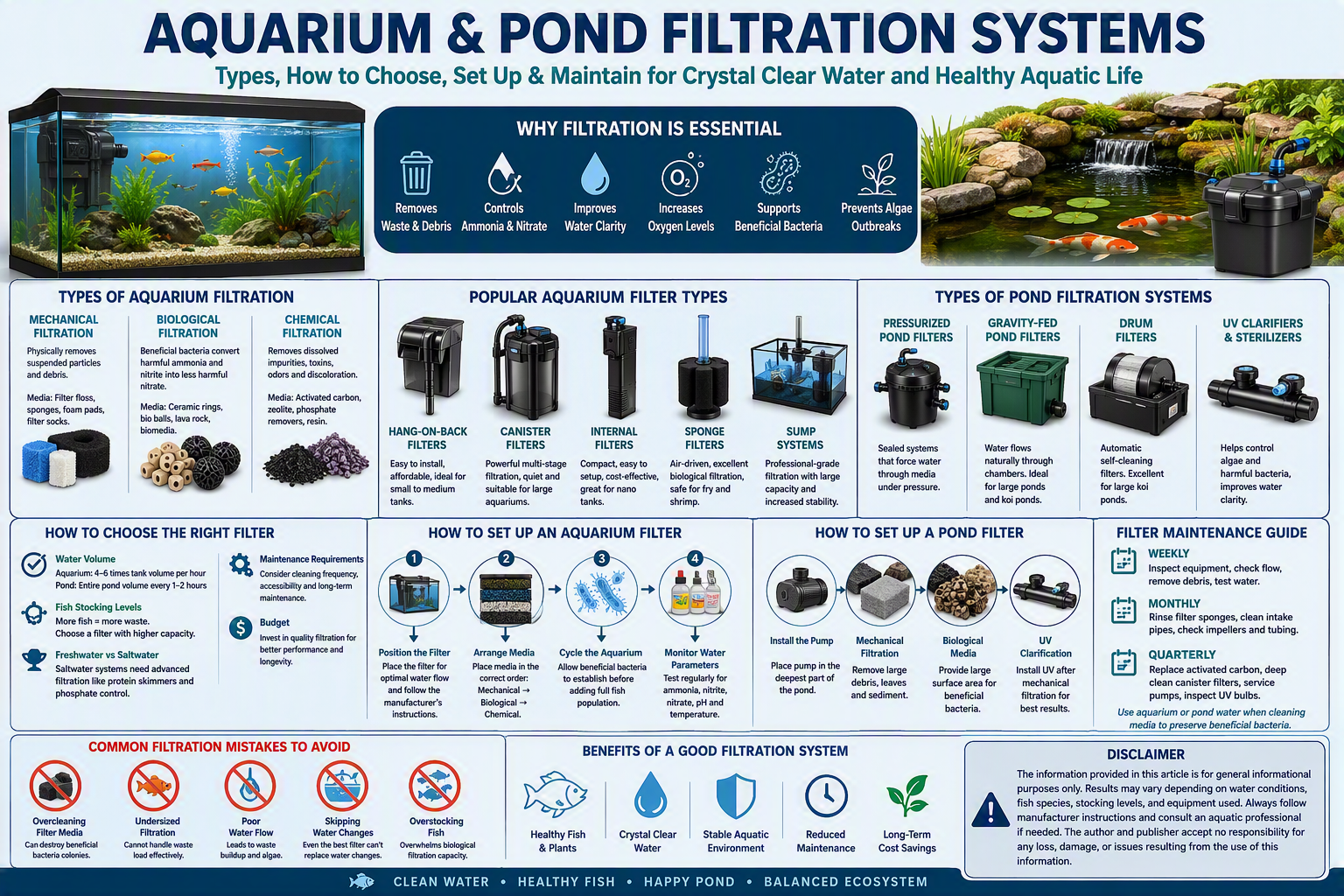
Why Filtration is Essential for Aquariums and Ponds
Filtration systems perform several critical functions:
- Remove fish waste, excess food, and debris
- Control ammonia, nitrite, and nitrate levels
- Improve water clarity
- Increase oxygen levels
- Support beneficial bacteria growth
- Prevent algae outbreaks
- Maintain a healthy environment for fish and plants
Without proper filtration, water quality quickly deteriorates, leading to fish stress, disease, and poor aquatic health.
Types of Aquarium Filtration Systems
1. Mechanical Filtration
Mechanical filtration physically removes suspended particles and debris from the water.
Common Mechanical Filter Media
- Filter floss
- Sponge filters
- Foam pads
- Filter socks
- Cartridge filters
Benefits
- Crystal-clear water
- Reduces organic waste buildup
- Protects biological filter media
Best For
- Freshwater aquariums
- Saltwater aquariums
- Fish-only tanks
- Community aquariums
2. Biological Filtration
Biological filtration is the most important filtration process for fish health.
Beneficial bacteria convert harmful:
- Ammonia → Nitrite
- Nitrite → Nitrate
This process is known as the Nitrogen Cycle.
Popular Biological Media
- Ceramic rings
- Bio balls
- Lava rock
- Sintered glass media
- Bio sponges
Benefits
- Natural waste processing
- Stable aquarium ecosystem
- Improved fish health
Best For
- Tropical aquariums
- Reef tanks
- Koi ponds
- Goldfish ponds
3. Chemical Filtration
Chemical filtration removes dissolved contaminants from water.
Popular Chemical Media
- Activated carbon
- Zeolite
- Phosphate removers
- Purigen
- Resin-based media
Benefits
- Removes odors
- Eliminates discoloration
- Improves water clarity
- Removes toxins and medications
Best For
- Aquariums with high waste load
- Marine aquariums
- Pond water polishing
Popular Aquarium Filter Types
Hang-On-Back (HOB) Filters
Hang-on-back filters are among the most popular aquarium filtration systems.
Advantages
- Easy installation
- Affordable
- Low maintenance
- Suitable for beginners
Best For
- Small to medium aquariums
- Freshwater fish tanks
Canister Filters
Canister filters provide powerful multi-stage filtration.
Advantages
- Large filter media capacity
- Superior mechanical filtration
- Excellent biological filtration
- Quiet operation
Best For
- Large aquariums
- Cichlid tanks
- Planted aquariums
- Marine systems
Internal Filters
Installed directly inside the tank.
Advantages
- Compact design
- Easy setup
- Cost-effective
Best For
- Nano aquariums
- Quarantine tanks
- Betta tanks
Sponge Filters
Air-driven filters that provide excellent biological filtration.
Advantages
- Safe for fry and shrimp
- Low operating cost
- Excellent bacterial colonization
Best For
- Breeding tanks
- Shrimp aquariums
- Hospital tanks
Sump Filtration Systems
A sump is a secondary tank connected to the main aquarium.
Advantages
- Massive filtration capacity
- Hidden equipment
- Increased water volume
- Professional-grade filtration
Best For
- Reef aquariums
- Large marine tanks
- Advanced hobbyists
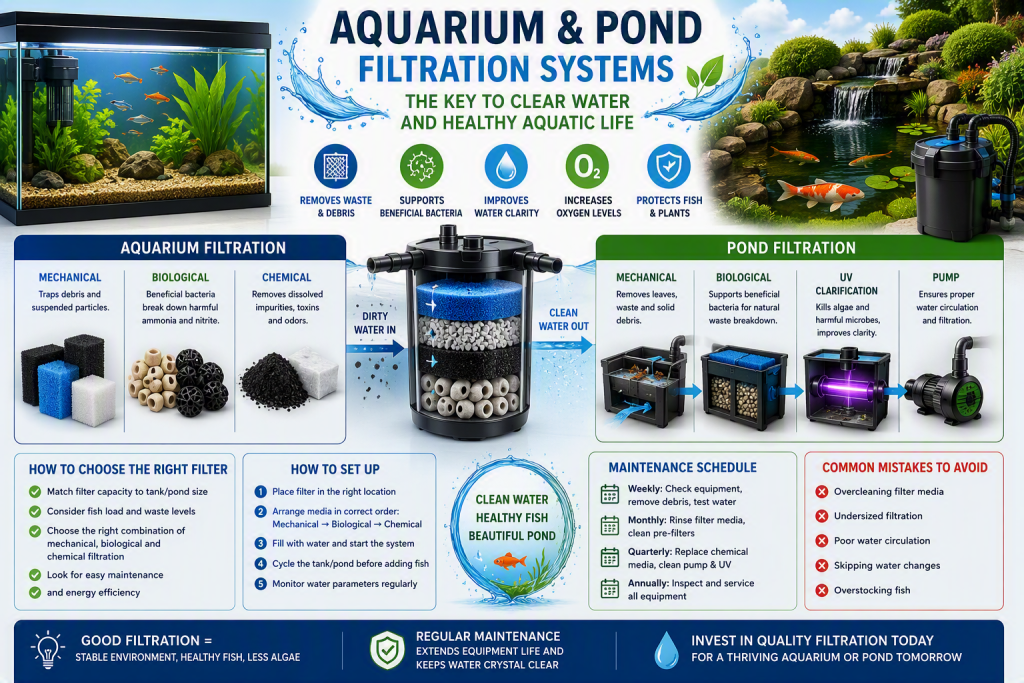
Types of Pond Filtration Systems
Pressurized Pond Filters
These sealed systems force water through filtration media under pressure.
Benefits
- Easy to conceal
- Efficient filtration
- Support waterfall installations
Best For
- Small and medium garden ponds
Gravity-Fed Pond Filters
Water flows naturally through filter chambers.
Benefits
- High biological filtration capacity
- Energy efficient
- Suitable for large ponds
Best For
- Koi ponds
- Commercial ponds
Drum Filters
Automatic self-cleaning mechanical filters.
Benefits
- Premium filtration performance
- Reduced maintenance
- Superior solid waste removal
Best For
- Large koi ponds
- High stocking densities
UV Clarifiers and UV Sterilizers
Ultraviolet filtration helps control algae and harmful microorganisms.
Benefits
- Green water control
- Improved clarity
- Reduced pathogen levels
Best For
- Outdoor ponds
- Koi systems
- Water gardens
How to Choose the Right Filtration System
When selecting an aquarium or pond filter, consider the following factors.
1. Water Volume
Choose a filter rated for at least:
- Aquarium: 4 to 6 times tank volume per hour
- Pond: Entire pond volume every 1 to 2 hours
Larger filtration systems generally provide better performance and stability.
2. Fish Stocking Levels
Heavy fish populations generate more waste.
Examples:
High Waste Fish
- Goldfish
- Koi
- Oscars
- Cichlids
These species require oversized filtration systems.
3. Freshwater vs Saltwater
Freshwater Systems
Typically require:
- Mechanical filtration
- Biological filtration
- Optional chemical media
Saltwater Systems
Often require:
- Protein skimmers
- Sumps
- Advanced biological filtration
- Phosphate control
4. Maintenance Requirements
Consider how often the system needs cleaning.
Low Maintenance Options
- Canister filters
- Drum filters
- Large biological filters
Higher Maintenance Options
- Internal filters
- Small cartridge filters
How to Set Up an Aquarium Filtration System
Step 1: Position the Filter
Follow the manufacturer’s installation instructions and ensure adequate water flow throughout the tank.
Step 2: Arrange Filter Media Properly
The ideal sequence:
- Mechanical filtration
- Biological filtration
- Chemical filtration
This arrangement maximizes filter efficiency.
Step 3: Cycle the Aquarium
Allow beneficial bacteria to establish before adding a full fish population.
Cycling Benefits
- Prevents ammonia poisoning
- Improves fish survival rates
- Creates a stable ecosystem
Step 4: Monitor Water Parameters
Test regularly for:
- Ammonia
- Nitrite
- Nitrate
- pH
- Temperature
Consistent monitoring prevents water quality issues.
How to Set Up a Pond Filtration System
Install the Pump
Position the pond pump where it can draw water effectively from the deepest section of the pond.
Connect Mechanical Filtration
Remove leaves, sediment, and larger debris before water enters biological chambers.
Add Biological Media
Provide ample surface area for beneficial bacteria colonization.
Install UV Clarification
Position UV systems after mechanical filtration for maximum effectiveness.
Aquarium and Pond Filter Maintenance Guide
Regular maintenance extends filter lifespan and improves water quality.
Weekly Maintenance
- Inspect equipment
- Check water flow
- Remove visible debris
- Test water quality
Monthly Maintenance
- Rinse filter sponges
- Clean intake pipes
- Inspect impellers
- Check airline tubing
Always use aquarium or pond water when cleaning biological media to preserve beneficial bacteria.
Quarterly Maintenance
- Replace activated carbon
- Deep clean canister filters
- Service pond pumps
- Inspect UV bulbs
Common Filtration Mistakes to Avoid
Overcleaning Filter Media
Cleaning all media simultaneously can destroy beneficial bacteria colonies.
Undersized Filtration
A filter that’s too small cannot effectively process fish waste.
Poor Water Flow
Dead spots encourage waste accumulation and algae growth.
Skipping Water Changes
Even the best filtration system cannot completely replace routine water changes.
Overstocking Fish
Excessive fish populations overwhelm biological filtration capacity.
Keywords for searching Aquarium and Pond Filtration Online
- Aquarium filtration systems
- Pond filtration systems
- Best aquarium filter
- Koi pond filters
- Biological filtration
- Mechanical filtration
- Chemical filtration
- Canister filter
- UV pond clarifier
- Aquarium water filtration
- Pond water treatment
- Fish tank filtration
- Freshwater aquarium filter
- Saltwater aquarium filtration
- Pond filter maintenance
- Aquarium filter setup
- Garden pond filtration
- Water quality management
- Beneficial bacteria filtration
- Crystal clear pond water
Conclusion
Choosing the right aquarium filter or pond filtration system is critical for maintaining healthy fish, clear water, and a stable aquatic environment. By understanding the different types of mechanical, biological, and chemical filtration, selecting the appropriate system size, and following a consistent maintenance schedule, hobbyists can enjoy vibrant aquariums and beautiful ponds with minimal water quality issues. Investing in a reliable filtration system not only improves water clarity but also supports the long-term health and wellbeing of fish, plants, and beneficial bacteria.